
Was Paying Cash For A Car Worth It?
 Previously I shared how we paid off our $15,000 car loan and were able to pay cash for two more cars in the following years.
As I thought back through our story, I was left asking myself “Was it worth it?â€.
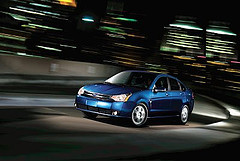
We got a lemon of a car in the Ford Focus, so yes it was extra hassle dealing with that. The fact of the matter is that bad breaks happen sometimes, even if my research said the Focus should have been pretty reliable. I don’t think making choices based on a fear of low percentage what-ifs isn’t going to breed success.
The decision was close to being a wash in the strictest financial sense. If we purchased the Murano right out of the gate, we would have paid about $17,000 for a similar Murano. That would have left us with financing of $8,000 @ roughly 7%. Since we paid about $8,500 in cash after the Focus trade in, we would have had the loan paid off in a year. That would have wasted about $300 in interest, and about $150 in opportunity cost in savings interest.
The only other thing to factor in is that we would own a car with an extra 15,000 miles on it. Using a Kelley Blue Book estimate that is about $1,000 dollars or so in unrealized savings.
Most of the numbers were irrelevant though. We had spent 4 years digging out of debt, so going back into debt would have proved that we hadn’t learned any lessons. On the other hand, sacrificing the car we wanted for a year and paying cash continued to set the stage for us to win financially. Going into debt would have opened up the financing option again on all other subsequent purchases. This was a test, and we passed. We had the benefits of being debt free firmly implanted in our minds, and we were not about to give them up.
The intangible benefits we received from paying cash seem extremely worth it, what do you think?

I’m going to Disney World! (In seven years)
A Couple’s Wist List – Motivation For Success
Don’t forget the “risk” factor. Paying with cash protects you in the event of a crisis or job loss. When something bad happens you don’t have to worry about making the car payment. When you finance a car you don’t “own” it until the bank gets all their money so if you miss a payment they will come and take what belongs to them, leaving you without transportation and in most cases having to pay the difference between what you owe and what they get at auction for the vehicle.
For me, risk is the single biggest factor for not going back into debt.
cashgoat – I totally agree that not having debt does significantly lower your risk level. I didn’t mention it in this case, because the risk of losing my current job is really low, although the risk of totaling the car is a real possibility. Thanks for the great comment!
Having debt per se is not a bad thing. I dont think you getting debt again would be evidence of you not having learned your lesson. No. If you have sufficient funds to take on debt and it makes sense financially to do so (sometimes timing is more important) then its not a bad thing. Debt is bad if you don’t plan for it.. like babies. hehe
It seems that incresingly our attitude is that we’re entitled to having the nicest of everything, regardless of whether or not we can afford it. so our strategy becomes debt. what before was somewhat shameful has now become some kind of financial strategy, which for most of us leaves us with sweet cars, huge houses and way too much stress. thanks for encouraging us in another direction Happy.
@Millionster, I really do think debt is rarely a good thing, especially given our lessons learned and goals in life. Debt is usually a dead weight, rather than a tool.
@Tim, Entitlement, great/ugly word. Thanks for the encouragement.
I’m with Tim (and you) on this one. It’s so sad to see depressed Lexus drivers. If you can pay cash, the more power to you! Cool post.
@Luke – Glad you ride the cash train! It is very sad when out stuff starts to own us, rather than us owning our stuff.
Well I have done both paid cash and got financing In my opinion Financing is the way to go because your more likely getting sum car that could have a 100 things go wrong with it, with in a mouths time if you do have problems (in most case’s) there is some kind of warranty.
Financing also builds your Credit so you can get a cheaper payment and a better car next time around.
@Brandon – Why would the car that you pay cash for be any different than the car that you finance? Going into debt out of fear is not a way to get financial freedom in my opinion.
On a personal note, I have bought a 99 Celica and a 94 Sentra with credit, and a 2001 Focus and a 03 Murano with cash. Buying with cash wins hands down.
Thanks for the discussion.
Not like everyone can afford a lump sum all at once to buy a car but they can manage $300-$500 a month
@Brandon – The idea is to save the $400 a month and then pay cash for something used and cheaper, and then keep saving the $400 for the next upgrade.
So what are your thoughts about leasing? We are ending a lease currently so we either need to a) buy it out (which would include financing) b) lease a new car or c) buy or finance a used car.
@Sue – Leasing is usually the most expensive way to drive a car. Maybe I should do a whole post on it to break it down.
Without knowing any specifics the best option for your finances would most likely be to be a solid used car with cash.
“Without knowing any specifics the best option for your finances would most likely be to be a solid used car with cash.” Couln’t agree more. Great post.
For business, leasing a vehicle is useful as it is fixed cost and off the balance sheet. If you buy it in the company name, then it gets written down as an asset of the company.
Have a look at my site for more information and see how good some of the prices are.
@Bob
Despite tax benefits, I still don’t think I would recommend leasing in any circumstance. Things like mileage overages, new car cost, damage, actual lease terms(money factor, trade-in value), lack of short term flexibility are all working against you.
Buying a newish used car with cash is usually the way to go in every circumstance.
If you can afford to pay cash, you should, although I agree that debt is not necessarily a bad thing. There really are finance specialists out there that do have your best interest at heart, I’m talking from experience. If the car is not related to a business, I would never lease…
I appreciated the blog and also the comments. I am looking for ideas to decide the best route to take next year when I purchase a car. I think after everything that I have taken I would combine a few ideas. I like the idea of paying off your car early but also understand the nature and risk of having issues with it. Suze Orman recommends not to buy a car that you cant pay off within 3 years. I like this idea. I think I would finance since now you can finance cars with 0% APR. I dont know how long that will last of course, but then pay the amount of in 2 years. This covers most areas of risk and security is why I pursue financial independence.
@Tony – Pay cash for the car and use the cash flow each month to pay off debt.
I’m actually planning on buying a car within the next year or so. I have thought about taking out a loan but have decided I would rather just pay cash. I feel I could also drive a hard bargain if I have cash. Cash is King after all. 🙂
Paying cash is the worst option of the three ways to finance a car. If you have the money in the bank to pay for the car, then obviously you can afford making low interest payments on a loan or lease. If you paid cash for a 25,000 car, the minute you drive it off the lot, you made your first $3,000 payment in depreciation. Your cash is gone! It’s tied up in a depreciating asset. If you lose your job or need your $25,000 back for some other more pressing need, you lost far more money than you would have had you decided to make $250 – $500 monthly payments.
If cash is king, then why would you want to give yours away? It baffles me how those who pay cash for a car feel as though they have no monthly debt. You absolutely have debt – it’ s just that you paid off your debt up front. Now you have to recoup the cash you threw away on a car that is worth 20% less than what you paid for it, each and every year. By preserving your cash, you have far more flexibility with your money – that is why it costs money to borrow.
I was shocked to read that your ford focus turned out to be a lemon. I have heard nothing but good things about them. For me personally, I prefer to buy cars with cash as well. Years ago I was in financial trouble and was looking for ways to cut monthly expenses and car loan was the first to go. This usually restricts me to buying cars 10+ years old and used, but it means no monthly payments. If you can afford to buy a new vehicle in one shot, I think that is the way to go.
@myCarBuddy
@Rob,
There are a couple of misconceptions in your comments. First, unless you are rich I don’t see buying a new car as a smart option. Why take the 30% off the lot value hit when someone else can pay for it. With that being the case, most older car loans are 6 – 10% interest, which would is throwing a significant chunk of change away each month.
Second, I would be buying a car with cash that I needed for other things. You have an emergency fund for that.
Third, find a spot were cash buys you more. Cash gives you bargaining power, especially in the private market.
Fourth, I don’t agree that paying cash is debt. You do lose the opportunity to do something else with the money which is called opportunity cost, but it isn’t debt. With debt, someone else has a right to tell you were your money needs to go.